Sunday, May 06, 2007

A Green College Whose Colors Are Blue and White: 18

A month? There's no possible way it's been that long since I posted last. I must have hit one of those wrinkles in time. I want to thank my regular readers--both of you--for your patience. ;)

Since I'm here and I'm yappin', let me tell you a little about what has been and will be going on in my life. In the past month, my daughter Natalie, a senior in high school, got all her college application replies and made her decision about where she will go. This fall, she will be enrolling as a freshman at Connecticut College, an excellent and relatively small private college on the coast in New London, Connecticut. She is tentatively interested in environmental science and Conn College is strong in that field. My son Colin, a senior at Wesleyan University in Middletown, CT, completed his senior thesis in April. He's a double major in film and psychology, and his thesis was a film, mixed live action and animation. His film was selected as the best senior film and he will be graduating with honors on May 27. We have a lot of doors opening and closing around the Theys house in the coming months. Lots of changes and excitement and a lot of tears, too, I'm sure.

Have you ever thought about the monumental task involved in dealing with a campus? Not just on the level of classes, and schedules and housing and food, but in dealing with the enormous energy and materials requirements. Connecticut College operates as what they call an Environmental Model. In 1931, they established a 60-acre arboretum adjacent to the campus. They expanded the arboretum concept to eventually include the campus's entire 750 acres.
They were one of the first colleges to offer a "Human Ecology" major going back to the 60s and they established a campus-wide recycling program around 1970. You can read more about what they've been doing--which is a great deal--here.

At the lunch for admitted students, we sat with the Campus Environmental Coordinator. She talked about the challenges involved in getting people from a wide variety of backgrounds and interests to "buy into" programs that make life a little greener. It seems to me that college is a great time to do this. Students' minds are probably as open as they'll ever be. I'll be watching this closely, because if we can't count on getting students on board, I'm not sure what that says for the future. But in the meantime, we're very pleased that there's such a green college in the family.

Saturday, April 07, 2007

Student Proposals--The Presentations: 17

I’m sorry for the delay in posting this. Sometimes, life gets away from me. Not only have we been overwhelmed here with an extra-large serving of regular life, but our daughter has been getting back her college decisions, and that's taken up a lot of time, too!

On March 28, John was in North Carolina—at NC State—to hear the students in the Landscape Architecture class present their proposals for use of the land. In case any of you students are reading this, please feel free to supply any corrections or additions you’d like. After all, this is my rendition of what John told me. And not only was he in and out of the room for various reasons, but his notes weren’t the best. Even he had trouble deciphering them. We’re looking forward to receiving copies of all the written proposals at the end of the course, so we’ll have to rely less on memory!

Almost all the students proposed some form of cluster housing, except for one. That’s probably to keep the amount of paving down, since driveways and roads can be shorter with cluster-site housing. The one proposal that didn’t include any houses proposed converting the entire property into a horse farm for use by NC State’s Veterinary School. She proposed housing for undergraduate and graduate students, and plenty of “housing” for horses, too, along with horse trails.

There was a proposal for a winery on the farm, with most of the farm given over to growing grapes. The development portion of the land was taken up with about 40 cluster-site houses, each on about 1/3 of an acre. Someone else proposed that the farm become a micro-brewery for beer and that water collection be done from the roofs of the houses in the development.

Another proposal was to convert the farm to a pecan farm. The farmhouse would become a restaurant that specialized in pecan-themed cuisine. The clustered houses in this proposal was grouped into small “villages.” Another proposal used five acres of the farm for solar collectors, so that the developed housing would not only be off-grid, but would be a net-energy supplier.

One student envisioned all the houses in the developed area grouped and facing one another in small groups or rings. Not concentric rings--just a series of rings. The driveways would come into the backs of the houses and all the house fronts would be facing into communal property in the center of the circle. Another proposal was based on a kind of traditional urban Chinese architecture called Siheyuan. Four houses face one another on the perimeter of a rectangle with a wall filling in the spaces between houses to complete the rectangle. This forms an interior courtyard for privacy and serenity. The woman who made this proposal also envisioned adding several small lakes to the property.

And one other plan called for 50 houses ranging from 1600 to 2400 square feet. The farm would become a site for community supported agriculture with crops grown for the development and the greater community. The horse coop would remain and there would be an ecocamp with both after-school and summer programs that would be run out of the farmhouse.

Most of the students incorporated passive solar and other standard green-housing features into the proposed homes. One even envisioned cycling homes, in which members of the development community would be able to live in different sized homes in the community as their needs changed.

I was sorry that I had to miss it. John really enjoyed the whole experience and was quite impressed with the variety of ideas and ways people viewed the farm and the property. I hope to have more details here after we receive the plans at the end of the course.

Sunday, March 25, 2007

Encountering Concrete Examples: 16

Right now, John is in North Carolina for two reasons. First, he's there for his mother's 88th birthday party. Some of the family got together today and celebrated. Happy Birthday, Mom! I'm sorry I couldn't be there. I'll bet the farm is beautiful right now. We still have snow on the ground in Connecticut, even though this was a freakishly snow-free winter.

The other reason for the visit is that this Thursday, the NC State class will be presenting their first stage proposals and we've been invited to attend. These will be proposals for conventional development. The rest of the term will be about preparing proposals for green development. It's quite exciting, getting to this stage. I hope to be able to report back next weekend on what John learns.

For today, though, I wanted to talk more about --yes!--countertops. Mark asked last week about concrete countertops. I know these are becoming quite trendy and I wanted to take a look and see: are they environmentally friendly? From what I've read, I think the answer is yes and no.

Apparently, the culprit in concrete is Portland Cement. Portland Cement, named after the Isle of Portland in southern England, is the binding agent in concrete. It isn't that the Portland Cement is environmentally unfriendly when it's in place in the countertop. It's the process of making the Portland Cement that's the problem. It uses a lot of resources and produces a large amount of greenhouse gases. But, it seems you can work part way around that by making concrete with half Portland Cement and half Fly Ash, a by-product of coal combustion. The claims are that it even makes the concrete more resistant to wear and staining. Here's a link to an article about slag cement.

This is one more case that points out how difficult it can be to decide what's truly green and what isn't. You have to look at the whole picture, from start to finish, and take into account all the energy and material costs that go into making a product--and its components. You also need to give some thought to what happens when an item becomes broken. Can it be fixed in an environmentally inexpensive way? Or does the first crack, tear or other breakdown mean nasty repairs, or worse, replacement. It's tempting when a product is cheap to simply toss it and get a new one when you're tired of it. That doesn't tend to be the case with something like countertops, but still, it's worth thinking about.

Saturday, March 17, 2007

More about Countertops--From Paper: 15

After last week's post about counter tops, I wanted to know more about what the choices are, so I started looking around. One of the interesting things I found was a product called shetkaSTONE. (That's how the manufacturer writes the name.) It's a non-petroleum based solid surface counter material that's made from recycled paper. They claim to use 100% pre- and post-consumer waste materials, which is a great idea given that paper accounts for something like 40% of the solid waste in the United States. Any waste produced in the shetkaSTONE manufacturing process is just fed right back in. The same is true of shetkaSTONE products that are being disposed of.

Phone books, waxed paper, glossy magazines, even plant fibers and cloth--they're all used in making shetkaSTONE. And you can install an undermount sink with these countertops! Now, that my idea of great news. The one big regret I have about our current kitchen, which we completely remodeled about 8 years ago, is that the sink isn't an undermount. Not only is it a pain in the neck, but the water collects around the edge, and that means more cleaning with environmentally unfriendly cleaners.

ShetkaSTONE comes in a big range of colors, and you can learn more about it right at their own site. If this sounds like an ad, it isn't. I never heard of the stuff until today.

Saturday, March 10, 2007

Sometimes the Best Choice is Counter-intuitive: 14

We've remodeled more than one kitchen. In fact, we're sort of famous in our own little circle for taking on major remodeling jobs, starting up just fine, going great guns until we're about 90% finished and then taking a long time to finish that last 10%. And here's the best part--as soon as we finish, we move. Not on purpose, but it works out that way.

We're really into colorful tile countertops, which are somewhat out of style these days. Granite is now the thing for counters. And builders and designers often promote it as somehow "in tune" with the earth, a natural choice for green living. But in fact, when you think about it, granite isn't earth friendly at all. Oh, it's earth friendly enough when it's sitting in the earth. The problem arises when you drag a huge chunk of it into your house--probably from halfway around the world.

First of all, granite has to be mined, and digging a humongous hole in the land and removing the rock leaves behind, at best, a major scar. It can also upset the surrounding ecology in ways that depend upon the details of the granite's (former) location. Well, you might say, you have to break some eggs to make an omelet. But how many eggs and how important is the omelet?

And talk about non-renewable. Not much in the way of new granite is springing up these days. Although to be fair, not much of the stuff we need to make solid surface counters--oil--is popping up, either.

But, then there's the shipping. Is it coming from a few hundred miles away? That's not great. But is it coming from, say, China to New Jersey? Think of the fossil-fuel cost of shipping this massive material to millions of kitchens throughout the United States. It seems that when you examine it, some natural things may be better off left where they are--in nature--unless there's a really good reason not to.

One of the interesting, newer alternatives that has caught my eye is recycled glass. You can even get that granite-y look, if you want to, although to be honest, it's not to my taste. Kitchens filled with granite always look like mausoleums to me. I really like the Medici Chapel in Florencebut I don't particularly want my kitchen to look like that, anymore than I want my living room ceiling to look like the Sistine Chapel. And while we're on the subject, I'm not at all fond of the current style in ceramic tile that makes everyone's floor and bathroom counter look like something out of Pompeii, but that's another topic for another day.

Recycled glass sounds like a great alternative. The number of styles available can be endless. It certainly isn't porous, it won't burn and it doesn't vent itself of various noxious gases after you install it. The next time we need to redo a kitchen, it's definitely on my list. Sounds great for my kitchen. Then, while I'm cooking, I can hum ...lookin' through a glass on-ion... with real feeling.

With a wink to Lennon-McCartney for that one.

Thursday, February 22, 2007

Back on the Scene with Some News!: 12

So, blogging every day was overly ambitious, but I should be able to do better than every six months. I’ll aim for weekly.

One very exciting thing has happened since I posted last. North Carolina State University approved our project as the spring topic for one of their graduate courses in the Landscape Architecture division of the College of Design.

The description of LAR 500 appears in the catalog as:

Application of information and skills developed in course work to environmental design problems. Process of site selection, activity programming, site planning and program evaluation followed employing creation of interactive communication systems between designer, clients and users. Goals include design of satisfying new landscapes as well as conservation and design strategies for existing culturally important landscapes and townscapes.

The course began in January and John made a trip to the farm in time to be there when the students made their first visit. They walked the whole property and got a good introduction. At the end of the course, we will have 18 students’ ideas to think about as we go forward with our planning.

Honestly, if you had asked me what landscape architecture was, I would have said it had to do with locating shrubbery. But I would have been wrong. “Landscape architects shape and protect the physical environment in which we live, work and play,” according to the School. That’s a great goal and I love the idea of doing a little more protecting and a little less shaping!

Friday, August 18, 2006

We've Got to Get Ourselves Back to the Garden: 11

We got back from North Carolina last Sunday night, taking the weekend to drive home. I really wanted to spend a little time working on Mom's gardens while I was there. She isn't able to do it herself anymore, and between Mom and Dad, they have covered several acres with perennials, shrubs and blooming trees. The shrubs are getting overgrown, particularly the ones near the house, and John and Bob, the men who work around the farm to keep things going, are great guys, but it's apparent that shrub shaping isn't their strong suit! With all the family and friends events, I finally got about half an hour out there the morning before we were leaving, and I was feeling pretty good about it when it began to rain, and that was the end of that. I feel especially bad because Mom allowed a local garden group to come in and weed the gardens in exchange for taking "some" perennials. It seems they took every hosta except the few in pots and much of the liriope. Mom was really depressed, and it made me angry that people would take advantage that way. I suppose that sort of less appealing side of human nature is something we will have to think about in any future plans we make.

There was some exciting news, too. NC State is considering using our project in possibly two of their classes this spring. It still has to come up for a vote, but the idea passed the preliminary committee. That means we would have landscape architecture students putting their fertile (ahem--that's a landscape joke) young imaginations to work for the farm. I'm hoping it passes the final vote because I think we would get some wonderful ideas from the students, and it would be nice to have NC State, the alma mater of John and his sister Jackie, involved.

On Saturday evening, we stopped in Bristow, VA, which is not very far outside Washington, DC. We had four tickets to see Crosby, Stills, Nash and Young in concert. It was their Freedom of Speech tour. The night was beautiful--about 70 degrees (F) and a near full moon. The outdoor arena was just about full of nearly 13,000 enthusiastic people and our seats were mighty good. It was a wonderful concert. And they ended with "Woodstock" in that lovely, haunting harmony--
We are stardust,
We are golden,
We are billion-year-old carbon,
And we've got to get ourselves back to the garden
.

Thursday, August 10, 2006

Back on the Farm: 10

I'm here on the porch--at the farm--listening to the cicadas and the occasional nicker of a horse. Things are winding down for the evening. My son and daughter are sitting at the kitchen table playing chess and John is outside giving the last shreds of a tour to Deborah. Yes, we managed to get together, had a lovely dinner, caught up on old times, and put our heads together a bit about the future of FarmFront. We've been talking to various family members about all this during the week. My niece and nephew, in particular, have a lot of enthusiasm and some great ideas. Sometimes, it seems as if this all just might happen.

John was reminiscing with his mother this morning--where else but in the kitchen--and they began to speculate about the ways the old roads used to run through the farm before the bottom land was flooded for the reservoir. There used to be four piles of stone that marked the corners of a large rectangle and a deep circular hole nearby. John used to go there as a child, and always thought that it was an old house and its well so he assumed that the road must have run that way. But Mom said no. That was an old slave house. I guess there's no reason to think there was a road there at all, since I don't imagine there was much of an interest in putting roads to slave houses in the bad old days. I've always known that there was a slave graveyard somewhere on the farm, but the idea of the house makes it all more real. Mom says this house was the overseer's house and that the plantation owner lived in town, in Raleigh. It's hard to truly imagine it all.

Tomorrow is our last day here before we head home to Connecticut. Of ocurse, we didn't do anywhere near as much as we would have liked as far as making progress on the FarmFront project. But there is the reality of being here and seeing (and hearing and smelling) it all again, and that's important too. From the youngest family member--one-year old Elahna--to the oldest--Dad, who will be 87 in September--we got to see just about everyone who still lives nearby. And if all goes well, future generations will be able to reconnect here for many years into the future.

Thursday, August 03, 2006

Old Friends: 9

A lot has been going on here this week, what with my daughter arriving home from Maine and leaving the next day for a short stay with her friend on the Outer Banks of North Carolina. And the whole family is getting ready to leave for a week plus on the farm. In fact, we'll be picking Natalie up somewhere along the way as we drive down to North Carolina from Connecticut, and the family she's with drives up from NC to CT.

Last week, John got a surprise email from an old friend, Deborah. She and John go way back to those crazy-friendship days you have in your early 20s. You know, the kinds of friendships you make in college and graduate school when anything is possible, and everything is new--and usually hilarious. It's all about sharing horrible dinners you cook yourself in some pan you found in the neighbor's trash, helping each other build bookshelves out of cinderblocks and old boards, and, well, other things that I just won't get into right now. But John and Deborah were friends in the city when John was at NYU and I've heard a lot about this group of pals over the years. I even met Deborah once a long time ago. John and Deborah have stayed in touch on the once-every-few-years level, and this email was just a hey-how-ya-doin' kind of thing.

John decided to answer with the news about FarmFront, and to his great surprise, got a most enthusiastic reply from Deborah. It seems that she's interested in sustainable living too, and even owns some land about an hour away from the farm, so now they're talking. She knows about straw bale houses, log end houses, and solar houses (hmmm--there's a bit of a Three Little Pigs thing going on there, if you think about it) and seems to spend a lot of her time growing things. We're hoping to get to see her while we're in North Carolina. By the way, she mentioned a story about an "attack goose" on the farm that is going to require some looking into.

I'm a huge Paul Simon fan, and always liked the Simon and Garfunkel song, Old Friends. At 16, I was completely overwhelmed by the touching image of two really, really old ("...how terribly strange to be 70...") people, sitting next to each other on that park bench, useless "bookends" living on borrowed time. Seventy! Hey, seventy is the new 40. So now I see it a little differently. Maybe 70 will be a time we spend in our state-of-the-art, sustainable house, keeping in shape with a little work outdoors, and book-ended by lots of people just like us--and who knows? Maybe even by some old friends.

Tuesday, July 25, 2006

An Inconvenient Truth : 8

Well, it looks like this may be more of a once or twice weekly blog than a daily one, at least in the short term. I have great intentions, but reality somehow intervenes.

Last night, we went to see An Inconvenient Truth. (That's Al Gore's documentary about global warming.) It isn't often that a movie has me in its thrall to the degree this one did without Marlon Brando, or at least a great cinematographer. This movie had neither. But, it was never dull, never boring and just about always chilling.

I was a little reluctant to see it, because I was afraid it would leave me discouraged--that it would feel hopeless, just at a time when it feels like we may have an oportunity to do something--something small, but something--about the way we live. But, that didn't happen. I came away with perhaps a little more hope than before that we'll all manage to get our act together and do something before it's truly too late.

This flick thoroughly debunks the ridiculous idea that Global Warming is "just a theory" with as many scientists lined up for it as against it. Of course, as I'm fond of saying, the idea that the sun will rise tomorrow is "just a theory" too, but it directly addresses the scientific opinion in peer reviewed journals, where the opinion is just about unanimous. Anyone can say he or she is a scientist, but in peer reviewed journals is where you'll find the genuine scientists.

At one point, Gore put up a chart showing how small actions taken by enough people can make the difference in getting us back to the CO2 levels of 1970. Okay, I have to admit it was more a symbolic than quantitative chart, but it got the idea across. Better to do something than nothing. Here is a link to the site.

I suppose this entry is only indirectly about our plan, but there is a relationship. Green living os one answer. Actually, it's the only answer for an individual. We might not be able, as individuals, to change corporate policies directly, but if we stop looking like we want the energy squandering products and lifetstyles we're constantly offered, maybe corporate America will stop offering.

Tuesday, July 18, 2006

Of Ponies, Presents and Perennials: 7

My friend Eileen pined for a pony, but I never did. Practical even as a child, I always wondered what she could possibly do with it on our Brooklyn street. I wasn't into that whole pony thing; I wanted a houseboat. But still, it was pretty exciting when my niece Sherrie got a pony on Christmas Day, 1982.


The picture shows the Theys family that day. Sherrie and her brother Jeffrey are sitting on the new pony. Peeking out from behind Sherrie is my father-in-law, Johnnie, and standing near the kids with one hand on Sherrie's leg is my mother-in-law, Georgia. John's brother Jeff--Sherrie and Jeffrey's father--is next to Johhnie, and Linda--their mother--is in the back next to Georgia. That's John on the end in the cool, cream-colored turtleneck, and next to him is Bill, who is married to John's sister Georgia—in the pink pants and holding the dog. In front of Bill is Katharine, a friend of the family and holding the horse is John's sister Jackie.

Sherrie and Jeffrey were the only grandchildren then. The other eight wouldn't begin coming along for another year and a half. Those two have children of their own now—two little boys and one little girl. Sadly, two of the people in the picture are no longer alive. Katharine died about 8 years ago. My brother-in-law Jeff died in 1991 at the age of 43. Of the siblings, I think Jeff was the one who loved the farm the most. He lived for years in a house he built right next to the farm, and he loved gardening. I often think of one time when Jeff was showing me around his greenhouse and his beautiful yard. This was before I knew anything at all about gardens and I wasn't even sure of the difference between annuals and perennials. Jeff said, "It's the perennials that make the garden. Annuals are just an afterthought." I didn't understand that at the time, but as I came to become more of a gardener, I knew he was right. It's the plants that establish themselves and stay that make the garden. Planting perennials is an investment and you reap the enjoyment of their beauty year after year. I think Jeff would have liked the idea of seeing his family farm become a special place for people who appreciate the natural gifts of the earth. It's very perennial.

Thursday, July 13, 2006

Back on Tuesday

This year, our daughter Natalie is volunteering for a couple of weeks in Acadia National Park. We leave tomorrow to drive her up to Maine, so there'll be no blogging for a few days. Look for more on Tuesday!

Wednesday, July 12, 2006

A Logo for the Website: 6


We continue to chip away at our plan. Right now, most of what we are doing consists of talking to people and reading, reading, reading. But we are working on making our website, FarmFront.com, more real. One of the things we wanted was a logo. We had some leftover drawings from years ago, when we were creating a logo for our consulting business. That company's name is Copper Beech Development, although it has nothing to do with land development. It began life as a software development company, and we thought some of the logo mock-ups presented to us had too strong a whiff of land development to them. But, we really liked one of them and I kept it.

After a whole lot of searching, I actually managed to find it. The envelope it was in was kind of yellow and ratty, and the illustration board had an interesting little warp to it. But simply finding it was something of a miracle. I have to confess that I save just about everything, but I never can find anything when I want to use it. Our son Colin, who is 21, worked on a scanned version of the mock-up. He made a few changes, jazzed it up a bit, added the name "FarmFront" and now we're using it. You can see it right up there on the top left. The website is coming along bit by bit. Much is still missing and we keep changing our minds about what should be on there and where, much to Colin's dismay. Did I mention he's doing the site, too?

I've always liked the logo because I thought it was just plain pretty. Now, I see in it both Mother Nature's trees and a family tree. Perhaps I'll hug it, and give it even more meaning. ;)

Monday, July 10, 2006

Organic Farming: A Way to Support the Farm? 5

One of the issues facing us is how to use the farm in just the right way. It needs to be environmentally friendly, productive to the point ofproviding the funds to support the farm and--well--farmy. One of the possibilities we've been kicking around is organic farming. The products of the farm--vegetables and flowers--could be sold to local restaurants. The residents of the community could have their own garden patches, and could also take part in the larger farming plan if they were interested.

So, we've started to look into how this is done. Of course, we're being careful because we want to avoid fake organics, of the type that American mega-business would like to substitute for the real thing. This is another iceberg whose tip we're just beginning to see, but there's a lot of encouraging material out there. Here's an example of a success story in organic farming. The Rodale Institute has been active in this area for a long time and is a nice resource if you've got an interest.
www.rodaleinstitute.org

Saturday, July 08, 2006

Everyone's Going Green, It Seems: 4

Speaking out loud about an idea like this for the first time has a lot in common with bringing your first baby home from the hospital. Until that moment you leave the sheltering corridors of the hospital, the baby--and your motherhood--is all peace, perfection and potential. It doesn't take more than a minute after you pull out in traffic for all of it to speed right on into the real world. That's a good thing, but a little scary.

We began by mentioning it to a few friends at home. The reaction was almost universally enthusiastic. Bit by bit, step by step, we've begun the process of networking ourselves into the bigger world of green development, and we are heartened and pleased by how well the idea has been received. We've begun to learn about the meaning of LEED-compliant development, triple-bottom line, zero energy building, net metering and a whole host of ideas that various contacts along the way have introduced us to. And once you learn about one of these ideas, it seems you begin to see it everywhere. Which reminds me of something that happened years ago. John and I lived in a little rented house on the beach and we decided we would start a salt water aquarium using animals from Long Island Sound. We poked around the beach quite a bit and never found any hermit crabs, but we figured we'd manage without. The first step was to gather gravel from the beach. We came home with two buckets of gravel, only to find that the pebbles and stones were in fact about a third hermit crabs. And after that? We saw hermit crabs all over the place every time we walked the beach. Well, it's like that with green building. I'm delighted to report people are thinking about it--and doing it--everywhere. Just last night, on the way out to dinner, we saw a school under construction, with a sign that read "Largest Solar Project in the State" and that was right in our own backyard! Cool!

Friday, July 07, 2006

A Bit About the Farm: 3

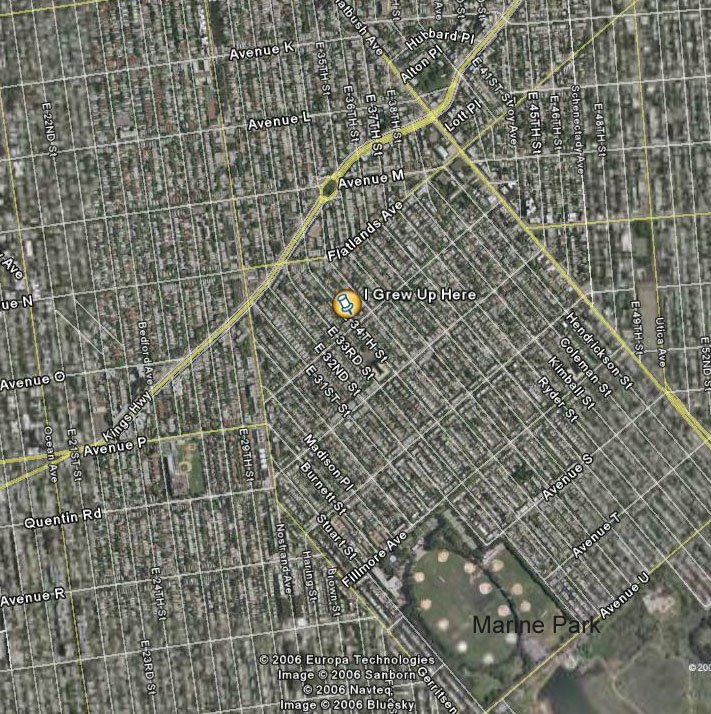
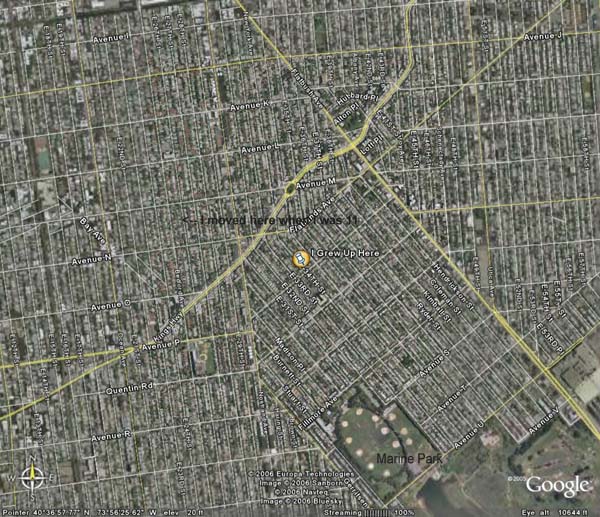
I grew up in New York, Brooklyn to be exact. My house was "semi-detached," which meant we shared a wall with another house. Our teeny front and back yards were equal parts cement and greenery, and I think all the birds were robins or starlings. And pigeons. There were over 100 children on my street, and across the street from the corner drugstore was a candy store. Next door to the candy store was "Tom's Chinese Hand Laundry." My parents both worked in Manhattan. My idea of an outing in nature was a trip to the park, although even the parks were half cement.

When I first heard John talking about the farm, I envisioned something out of the Wizard of Oz. You know, dry and lots of people in overalls. When I saw the place, I realized I wasn't in Kansas, at least not a la MGM Studios. It was lush, green and both busy and sleepy at the same time. There were people coming in and out, constant small emergencies to be dealt with, and always some animal that needed feeding. But there was also a strong sense of time standing still, of a place removed from other places, where between emergencies and door-slams and feedings, you owed no obligation or explanation to anyone. Of course, by that point, the farm was no longer functioning as intensely as it had in its earlier years. I came to learn there had been much less of the sleepy part back then. But, I saw right away that my husband's childhood and mine had probably more than a little different.


My old neighborhood in Brooklyn, NY. At the bottom right of the picture, you can see part of Marine Park. The visible portion is just about the size of the entire farm. QUite a few of my 100-kid blocks would fit in that space!


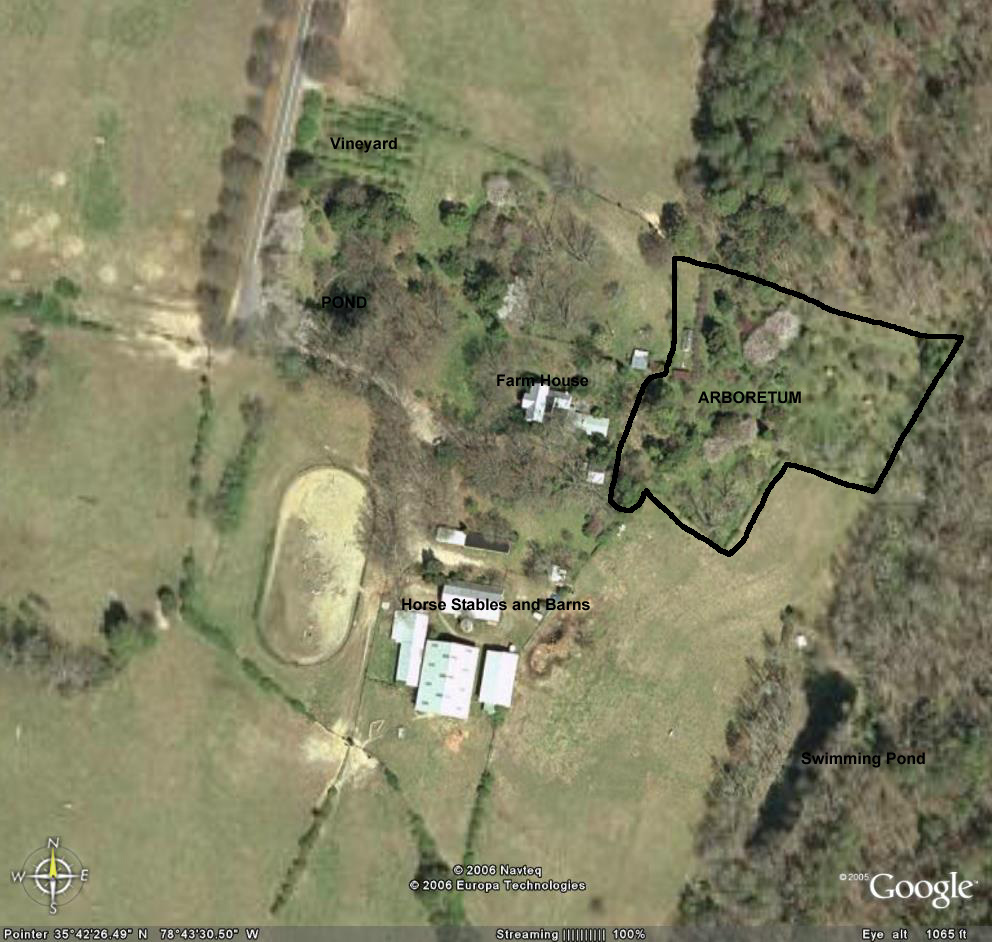
The center of the farm today. You can see the stables and the horse ring. The arboretum contains many trees and shrubs from around the world that my father-in-law planted and tended. You can also see some of the trees they planted along the road. They bloom in the spring.

The horse farm is run as a co-op right now. Some of the people in the co-op have had their horses there for 20 years. My mother-in-law and father-in-law both loved to garden, and after he retired, they devoted all their free time--when they weren't traveling--to their gardens. One of my outstanding memories is the almost overwhelming jasminey scent of the Osmanthus fragrans on autumn evenings. It's planted right beside the big front porch. My mother-in-law loves birds, and has always kept peacocks, Guinea Hens, various chickens and such roaming the farm. The peacocks roost in the trees at night and it was their unearthly shrieks, that sound just like "Heeeeeeeelp!" to city ears, that woke me in the middle of my first night there and had me clinging to the bedpost. One time, there was even a pet turkey. Her name was Gertie and she thought she was a dog. If you sat outside, she'd come over and cozy right up next to you. The surprising thing is, she could leave you with a numb foot, just like a big dog.

Thursday, July 06, 2006

So Here's the Basic Story: 2

I’m married to John, the oldest of the four children of Johnnie and Georgia Theys. We live in Woodbridge, Connecticut, a neighboring state of New York about 600 miles from the farm. Johnnie and Georgia bought the farmland from Dwight and Lethia Franks in November of 1950 when my husband was seven years old. They were looking for a place to fill my Brooklyn-born father-in-law’s dream of owning a farm. My mother-in-law grew up in Asheville and had family in the Raleigh area, so it was a natural place for them to look for farm land. In their mid 80s, they still live there today, and the road leading to the farm is now paved and named Theys Road.

As people who love nature, Johnnie and Georgia came up with a wonderful idea. In 2000, they placed the Land in the Triangle Land Conservancy, to ensure that it will never be developed. These beautiful 92-acres bordering on Lake Wheeler are now guaranteed to remain unspoiled, although ownership of the farm remains with the family, and will pass from Johnnie and Georgia to the next generation some day--a day we all hope is far in the future.

The second part of this tale is about a piece of land--about 60 acres--that Johnnie and Georgia gave to their children as a gift many years ago. This land is adjacent to the farm, and the idea was that someday we would sell it or develop it, but "someday" was always so far in the future, that no one ever felt much need to think about it very much. This picture shows the farm and the land, which we all call "The Perdue Property" after the family who sold it years ago. Incidentally, the accent in Perdue is on the first syllable, in good old southern style.

In March of this year, we took our daughter for an overnight trip to visit colleges. In the car, somewhere near Vermont, my husband returned to a favorite conversation of ours--how much we'd like to build an energy-efficient house. We've been talking about this on and off since the late 70s, but that day it suddenly struck me. "Why couldn't we build green houses in North Carolina?" I said. We all had the same thought, which can be summed up as "Oooooooooh"! We called my son at college. His reaction can also be summed up as "Oooooooooh"! But then it was time to get out of the car and look at a college.

Later that night, John had the inspiration that made this idea so special. "We could give the community access to the farm, " he said. Within moments, the synergy was obvious. It was a delightful answer to a problem that had been perplexing all of us for years: what would happen to the farm when it came into the hands of the next generation? How could we afford to keep it? What would we do on it? Who would live there? No one had been able to answer those questions, and so we had--with a lot of sadness--concluded that the farm would have to be sold. And even though it could not be developed or divided, it seemed destined to become the playground of one wealthy family. Suddenly, we could see a glimmer of hope, not only for keeping the farm, but for keeping it alive, the way Georgia and Johnnie had always envisioned.

Wednesday, July 05, 2006

The Theys Family Farm: 1

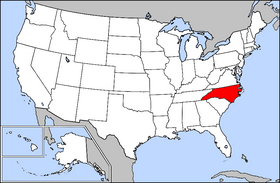
I don’t know if it was the Doberman, the attack pigeon or the roaming peacocks that scared me the most the first time I visited the farm. The combination though, not to mention the rooster, the Guinea Hens and the rest of the dogs, was enough to keep a New York girl like me in a state of anxiety pretty much around the clock. It was 1976, I was 24 and it had been perhaps two hundred years since the first clearing of the farm’s woodlands. That’s a long time by American standards. Thirty years later, that visit remains vivid for me not only as the first time I met my future in-laws, but as the first time I set foot on that very special place—the Theys family farm in Raleigh, North Carolina. On the map, that's North Carolina in red; Raleigh is just about in the center.

A lot has changed over the years, and like many families, we know the day will come when we can no longer afford to hang onto the farm, but we don’t want to let it go either. So, we have a plan, or at least the beginnings of a plan. We'd like to build a small community of sustainable housing adjacent to the farm, and to incorporate within that community access to the farm and all it has to offer. We envision a community of homes whose owners share a common interest in green, sustainable living, and a love of the vanishing American family farm. We’re calling this “farm-front property.” Just like ocean front and lake front property, American farmland is not only limited, it’s disappearing fast. But our farm is guaranteed to be preserved, as I will explain in later posts. We have just begun, and this blog will record our progress as we continue, and hopefully succeed. There’s a lot to tell, and I hope to post every day, recording not only our progress, but some of the history of the farm and the family.